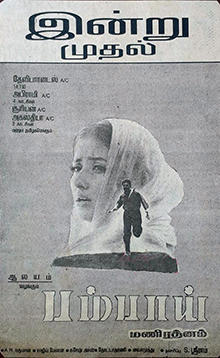
Mani Ratnam's Bombay: A Timeless Saga of Love, Riots, and A.R. Rahman's Enduring Soundtrack
Mani Ratnam's 1995 masterpiece,
Bombay, remains an indelible landmark in Indian cinema, a film that dared to weave an intimate tale of inter-religious love against the devastating backdrop of the 1992-93 communal riots. More than just a romantic drama,
Bombay is a powerful exploration of societal fault lines, the resilience of the human spirit, and the desperate yearning for harmony in a fractured world. With its poignant narrative, compelling performances, and a revolutionary soundtrack by A.R. Rahman, the film transcended linguistic and cultural barriers, leaving an enduring legacy that resonates deeply even decades later.
Directed with Mani Ratnam's characteristic blend of artistic vision and commercial appeal,
Bombay marked the second installment in his acclaimed political trilogy, following *Roja* (1992) and preceding *Dil Se..* (1998). This cinematic triptych explored human relationships amidst turbulent Indian political landscapes, solidifying Ratnam's reputation as a filmmaker unafraid to tackle complex social issues with sensitivity and unflinching honesty.
The Heart of Bombay: An Unforgettable Love Story Amidst Turmoil
At its core,
Bombay tells the deeply moving story of Shekhar (Arvind Swamy), a Hindu journalist, and Shaila (Manisha Koirala), a Muslim village girl. Their forbidden romance blossoms in a small, traditional village, defying the rigid societal norms and parental opposition that sought to keep them apart. Their courageous decision to marry and relocate to the bustling metropolis of Bombay (now Mumbai) symbolized a hopeful escape from prejudice, a quest for a life where their love could thrive free from religious divides.
Arvind Swamy and Manisha Koirala deliver unforgettable performances, imbuing their characters with a raw vulnerability and fierce determination that makes their journey profoundly relatable. Swamy portrays Shekhar with a quiet strength and conviction, while Koirala captures Shaila's innocence, passion, and eventual anguish with remarkable depth. Their chemistry is palpable, making their struggle for acceptance and survival all the more heartbreaking as their dream of a peaceful life together is shattered by the encroaching shadows of communal hatred. The film's exploration of
interfaith love story amidst the 1992 riots was particularly bold for its time, challenging audiences to confront their own biases and prejudices.
Beyond Romance: The Shadow of the Bombay Riots and a Plea for Harmony
While the personal love story forms the backbone of
Bombay, the film gains its true gravitas by setting this intimate narrative against the horrifying reality of the 1992-93 Bombay riots. These real-world events, sparked by the demolition of the Babri Masjid, plunged the city into an inferno of violence, exposing the fragile fabric of communal harmony in India. Mani Ratnam masterfully depicts the transition from idyllic romance to harrowing survival, as Shekhar and Shaila find their family, including their twin sons, caught in the crossfire of religious fanaticism.
The director does not shy away from showing the brutal human cost of the riots. Through the couple's desperate search for their children amidst burning streets and widespread destruction,
Bombay transforms from a love story into a poignant social commentary. It's a stark reminder of how easily peace can be shattered by intolerance and how ordinary lives are irrevocably altered by collective madness. Yet, even in the darkest moments, the film subtly interweaves messages of hope and humanity, showcasing instances of compassion and unity that emerge amidst the chaos, urging viewers to reflect on the importance of secularism and tolerance. The film’s sensitive handling of such a volatile subject matter earned it widespread praise, positioning it as a significant voice for peace and understanding.
A.R. Rahman's Maestro Touch: The Soundtrack Legacy of Bombay
No discussion of
Bombay is complete without acknowledging the groundbreaking genius of A.R. Rahman's soundtrack. The music for
Bombay wasn't just background; it was an integral character, amplifying every emotion, every tension, and every moment of solace within the film. Rahman, who had already gained significant recognition, cemented his status as a musical visionary with this album, earning his fourth consecutive Filmfare Best Music Director Award (Tamil).
The soundtrack, a masterful fusion of traditional Indian melodies with contemporary global sounds, became a cultural phenomenon. Tracks like "Tu Hi Re" (sung by Hariharan and Kavita Krishnamurthy) beautifully encapsulated the romantic yearning, while "Kehna Hi Kya" (Chithra) offered a vibrant, celebratory contrast. "Uyire Uyire" perfectly conveyed the depths of their love. However, it was perhaps "Bombay Theme" and "Kannaalanae" that best showcased Rahman's ability to create atmospheric, evocative soundscapes that transcended language. The compositions were innovative, rich in instrumentation, and imbued with an emotional depth that resonated with millions, becoming a massive commercial success and influencing Indian film music for years to come. Rahman’s ability to infuse both tenderness and turmoil into his compositions undoubtedly enhanced the film’s emotional resonance, even in its most intense sequences, making the
Bombay soundtrack one of the most iconic in Indian cinematic history.
Lasting Impact and Enduring Relevance
Upon its release,
Bombay garnered significant critical acclaim and commercial success, not only in India but also among diaspora audiences worldwide. It was screened at various international film festivals, including the Philadelphia Film Festival in 1996, highlighting its universal appeal. The film received numerous accolades, including the prestigious National Film Award for Best Feature Film on National Integration and Best Editing. Manisha Koirala earned the Filmfare Critics Award for Best Actress, and the film itself was recognized with the Filmfare Critics Award for Best Film. In South India, it swept the Filmfare Awards South, winning for Best Film, Director, Actress, and Music Director.
With an impressive IMDb user rating of 8.1/10 based on approximately 15,000 votes,
Bombay continues to be celebrated by audiences for its emotional depth and bold social commentary. Viewers consistently commend Mani Ratnam's direction, the powerful performances of Arvind Swamy and Manisha Koirala, and A.R. Rahman's unforgettable music. The film's brave handling of such sensitive topics, which even led to some controversy at the time, solidified its status as a landmark in Indian cinema for its unwavering call for secularism and tolerance. Reflecting on
the enduring legacy of Bombay: a call for communal harmony, it’s clear the film’s message remains profoundly relevant in today’s increasingly complex global landscape. It continues to inspire discussions on communal relations and serves as a powerful reminder of humanity's capacity for both love and destruction.
Conclusion
Mani Ratnam's
Bombay stands as a timeless cinematic achievement, a testament to the power of storytelling to confront difficult truths while celebrating the enduring strength of love. It masterfully blends a poignant romantic narrative with unflinching social commentary on one of India's darkest periods, elevated by A.R. Rahman's breathtaking musical score. More than just a film,
Bombay is a profound experience, a powerful plea for peace, understanding, and the recognition of our shared humanity, making it an essential watch for anyone seeking to understand the complexities of interfaith relations and the resilience of the human spirit.